
$0.00
Booklet Printing Guide: Saddle-Stitch vs Perfect Bound
- August 6, 2026
- Design Tips, Industry Solutions, Local Businesses, Printing Tips
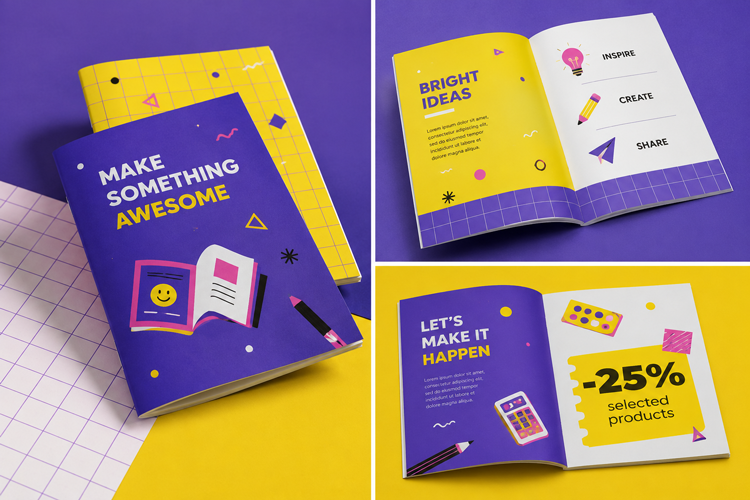
Ordering a booklet sounds simple until you hit the binding question. Saddle stitch or perfect bound. The two terms get thrown around a lot, but most people ordering a booklet for the first time have no idea what the difference actually means for their finished product, let alone which one suits their job. This guide breaks it down so you can order with confidence.
What Is Saddle Stitch Binding?
Saddle stitch is the binding method most people picture when they think of a simple booklet. Folded sheets are nested inside one another and stapled through the spine, usually with two staples. It is the fastest and most affordable binding method, which makes it the default choice for shorter publications.
Best suited to:
- Event programs
- Product catalogues under around 60 pages
- Company profiles and info booklets
- Magazines and newsletters
- Training manuals and course handouts
The main limitation is page count. Once a booklet gets too thick, the staples cannot hold the spine together properly and the pages start to fan out rather than sitting flat, so saddle stitch has a practical ceiling most printers will flag before it becomes a problem.

What Is Perfect Binding?
Perfect binding is the method used on most paperback books. Individual pages are glued to a flat spine and wrapped with a separate cover, giving the booklet a flat, square edge rather than a folded one. It looks and feels noticeably more premium, closer to a book than a stapled pamphlet.
Best suited to:
- Larger catalogues and product guides
- Annual reports
- Portfolios and lookbooks
- Thicker training manuals or reference guides
- Any publication where a professional, book like presentation matters
Perfect binding costs more than saddle stitch and generally requires a higher minimum page count to work properly, since the glued spine needs enough thickness to bind securely.

Page Count Is the Deciding Factor
If there is one rule to remember, it is this: page count drives the decision more than anything else. As a rough guide, booklets under 48 pages are usually best suited to saddle stitch, both for cost and because the staples will hold the spine flat without issue. Above that page count, perfect binding becomes the more practical and often the only viable option, since a thick saddle stitched booklet tends to bulge at the spine and will not sit flat when opened.
Presentation and Use Case
Beyond cost, think about how the booklet will actually be used. A saddle stitched booklet folds flat and opens easily, which makes it well suited to something handed out and read casually, like an event program or a course handout. A perfect bound booklet sits more rigidly and presents as a proper publication, which makes it the better choice when the booklet itself is part of your brand impression, such as a company portfolio or an annual report shared with clients or investors.
Other Binding Options Worth Knowing

While saddle stitch and perfect binding cover most booklet jobs, a couple of other options exist for specific needs. Wiro or spiral binding allows a booklet to lie completely flat or fold back on itself, which is useful for manuals, workbooks, or anything that needs to stay open on a desk. It is worth mentioning to your printer if that kind of flexibility matters for how the booklet will be used.
Not sure which binding suits your next project? ctrlPrint can help you choose based on page count, budget, and how the booklet will be used. Browse our booklet printing options.